Have you ever heard a doctor say “altered mental status” and wondered what that really means? Or maybe you are a medical coder, biller, or healthcare student trying to figure out the correct ICD 10 code for altered mental status. Either way, you are in the right place.
Let’s break it down in a simple and practical way so you can fully understand how this works and why it matters.
Understanding Altered Mental Status
What Is Altered Mental Status?
Altered Mental Status, often shortened to AMS, is not a disease by itself. It is a symptom. Think of it like a warning light on a car dashboard. Something is wrong, but you still need to figure out what exactly is causing it.
AMS refers to a change in a person’s level of awareness, thinking, or consciousness. This can range from mild confusion to complete unresponsiveness.
Common Symptoms of AMS
Patients with altered mental status may show:
-
Confusion
-
Disorientation
-
Memory problems
-
Agitation
-
Drowsiness
-
Coma
It can happen suddenly or gradually. Sometimes it is subtle. Other times it is dramatic and life threatening.
Why AMS Is a Medical Emergency
In many cases, altered mental status is treated as a medical emergency. Why? Because it can be caused by serious conditions like stroke, infection, or low blood sugar.
It is like smoke coming from a building. You do not ignore it. You investigate immediately.
Overview of ICD 10 Coding System
What Is ICD 10?
ICD 10 stands for the International Classification of Diseases, Tenth Revision. It is a standardized coding system used worldwide to classify diseases, symptoms, and medical conditions.
In the United States, healthcare providers use ICD 10 CM codes for diagnosis reporting.
Why Accurate Coding Matters
Accurate coding is not just paperwork. It affects:
-
Insurance reimbursement
-
Medical records
-
Public health statistics
-
Legal documentation
Using the wrong code is like putting the wrong address on a package. It may not reach where it is supposed to go.
Who Uses ICD 10 Codes?
ICD 10 codes are used by:
-
Physicians
-
Medical coders
-
Hospitals
-
Insurance companies
-
Government health agencies
If you are in healthcare billing or documentation, knowing the correct ICD 10 code for altered mental status is essential.
ICD 10 Code for Altered Mental Status
Primary ICD 10 Code for AMS
The most commonly used ICD 10 code for altered mental status is:
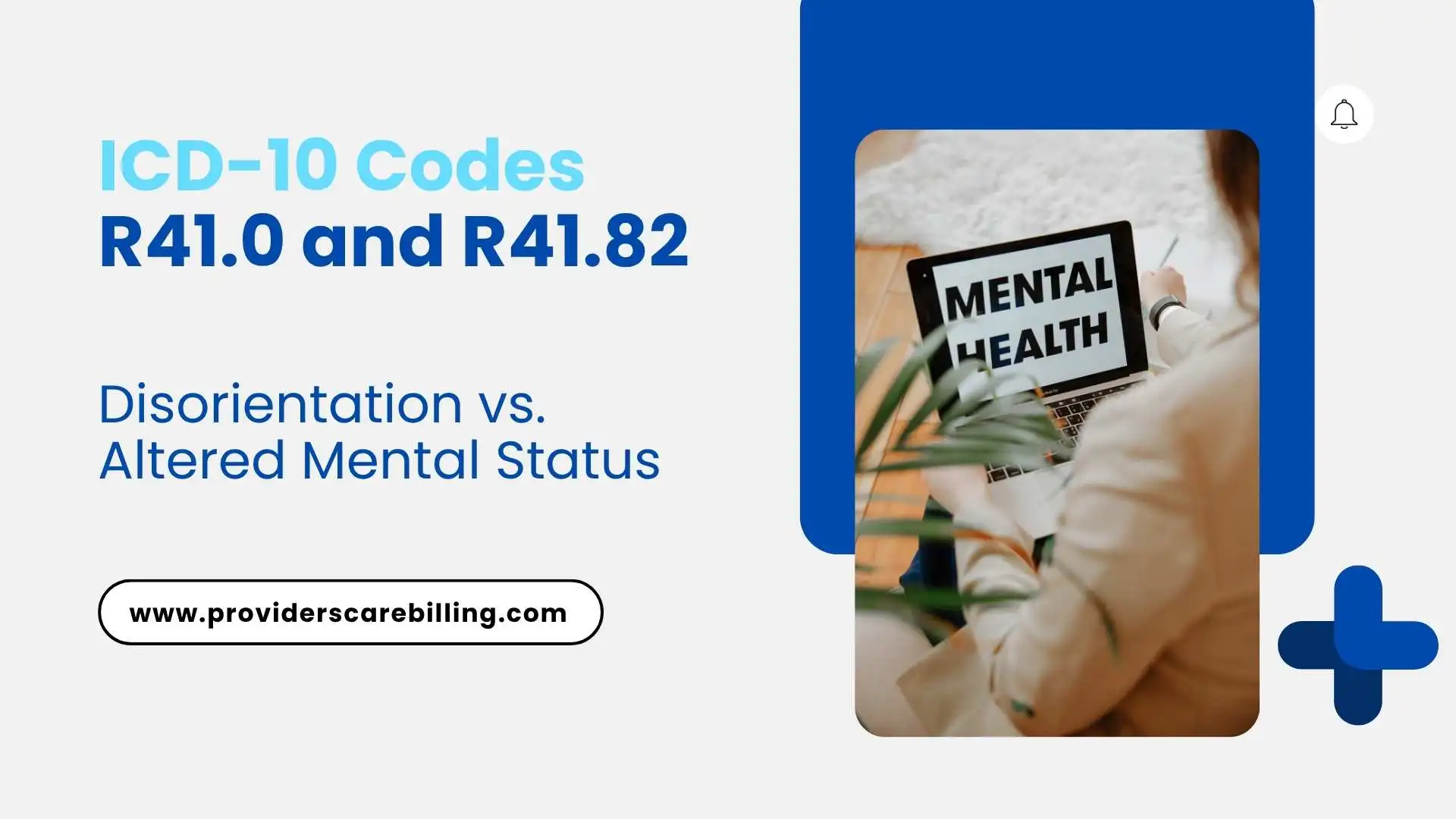
R41.82 – Altered Mental Status, Unspecified
This code is used when a patient presents with altered mental status, but the underlying cause has not yet been determined or documented.
It falls under Chapter 18 of ICD 10, which includes symptoms, signs, and abnormal clinical findings not elsewhere classified.
R41.0 – Disorientation, Unspecified
Another related code is:
-
R41.0 – Disorientation, unspecified
This is used when the documentation specifically mentions disorientation rather than general altered mental status.
R41.82 vs Other Related Codes
It is important not to confuse R41.82 with more specific diagnoses such as:
-
Delirium
-
Dementia
-
Encephalopathy
If the provider documents a specific condition, you should code that condition instead of using R41.82.
In short, R41.82 is a temporary placeholder when the exact cause is unknown.
When to Use R41.82
Clinical Documentation Requirements
Before assigning R41.82, make sure the medical record clearly states “altered mental status” or a similar phrase.
If the physician later identifies the cause, such as urinary tract infection with delirium, you should code the confirmed diagnosis.
Differentiating Between Specific and Unspecified Codes
Unspecified codes like R41.82 are acceptable, but only when appropriate.
If the documentation supports a more detailed diagnosis, always go with the specific code. Think of unspecified codes as a general label when details are missing.
Causes of Altered Mental Status
Understanding the causes helps coders know when R41.82 is appropriate.
Metabolic Causes
-
Hypoglycemia
-
Electrolyte imbalance
-
Liver failure
-
Kidney failure
Even something as simple as low blood sugar can dramatically change mental status.
Neurological Causes
-
Stroke
-
Seizures
-
Brain tumors
-
Head trauma
These are serious conditions and often require immediate imaging and intervention.
Infections and Toxic Exposure
-
Sepsis
-
Meningitis
-
Drug overdose
-
Alcohol intoxication
Infections are a common cause, especially in elderly patients.
Psychiatric Conditions
-
Severe depression
-
Psychosis
-
Acute anxiety episodes
However, psychiatric causes are usually diagnosed after ruling out medical reasons.
Coding Guidelines and Best Practices
Following Official Coding Guidelines
Always follow official ICD 10 CM guidelines. Code what is documented, not what you assume.
If the provider documents “acute metabolic encephalopathy,” do not use R41.82. Use the code for encephalopathy instead.
Avoiding Common Coding Errors
Common mistakes include:
-
Coding altered mental status when delirium is documented
-
Using unspecified codes when specific ones are available
-
Ignoring secondary diagnoses
Accuracy is everything in coding.
Importance of Provider Documentation
Good documentation is the foundation of correct coding.
If documentation is unclear, query the provider. Do not guess. Guessing in medical coding is like building a house on sand.
ICD 10 Code for Altered Mental Status in Emergency Settings
Emergency Room Coding
In the emergency department, R41.82 is frequently used because the cause is often unknown at arrival.
Later, once tests are completed, a more specific diagnosis may replace it.
Inpatient vs Outpatient Coding Differences
For inpatient admissions, the principal diagnosis should reflect the condition chiefly responsible for admission.
If altered mental status is due to sepsis, sepsis becomes the principal diagnosis.
For outpatient visits, R41.82 may stand alone if no definitive cause is established.
Billing and Insurance Implications
How AMS Codes Affect Reimbursement
Insurance companies rely on diagnosis codes to determine medical necessity.
If altered mental status justifies imaging, lab tests, or hospitalization, proper coding ensures appropriate reimbursement.
Medical Necessity and Documentation
Without proper documentation, claims may be denied.
Clear notes about symptoms, clinical findings, and diagnostic reasoning protect both the provider and the patient.
Examples of ICD 10 Coding Scenarios
Case Study 1
A patient arrives confused and lethargic. No clear cause is identified in the emergency department.
Code: R41.82 – Altered Mental Status, Unspecified
Case Study 2
A patient presents with confusion. Lab tests show low sodium levels, and the provider diagnoses hyponatremia causing confusion.
Code: Hyponatremia
Do not use R41.82 as the primary diagnosis if the underlying cause is documented.
Case Study 3
An elderly patient has confusion due to urinary tract infection. The provider documents delirium due to UTI.
Code: Urinary tract infection and delirium
Avoid R41.82 because a specific diagnosis is provided.
Conclusion
The ICD 10 code for altered mental status is most commonly R41.82, used when the cause is not yet identified. It acts like a temporary label while clinicians search for the root problem.
However, once a specific diagnosis is documented, that diagnosis should be coded instead of using an unspecified symptom code.
Accurate coding is not just about numbers. It impacts billing, patient care, legal compliance, and healthcare data. So always follow documentation carefully, apply official coding guidelines, and choose the most specific code available.
When used correctly, R41.82 serves as a valuable tool in medical documentation and reimbursement.
FAQs
1. What is the ICD 10 code for altered mental status?
The most commonly used code is R41.82 – Altered Mental Status, Unspecified.
2. When should R41.82 not be used?
It should not be used when a specific diagnosis like delirium, encephalopathy, or dementia is documented.
3. Is altered mental status considered a diagnosis?
No. It is a symptom that requires further evaluation to determine the underlying cause.
4. Can R41.82 be used as a primary diagnosis?
Yes, especially in emergency settings when no underlying cause has been identified yet.
5. Does using unspecified codes affect reimbursement?
It can, especially if documentation does not support medical necessity. Always use the most specific code available.